
If your affiliate content has lost traffic in 2026, you’re not alone. Recent data shows that 71% of monitored affiliate sites experienced ranking declines, with many seeing drops of 30-50%.
The pages hit hardest are the ones that used to be the foundation of affiliate content SEO: templated “best WordPress hosting” lists, AI-generated roundups, and reviews that don’t reflect real product usage. Content that once scaled easily is now being systematically deprioritized.
In short: Google’s 2026 core updates now reward affiliate content built on firsthand product experience and penalize generic, templated pages.
Key takeaways
- Google now prioritizes real product experience over optimized but generic content
- Pages with original screenshots, data, and firsthand insights are gaining visibility
- Strong author credibility signals are now essential for ranking
- Fewer, deeper articles outperform large volumes of shallow content
- Affiliates who adapt now can recover visibility in upcoming Google core updates
What changed in Google’s 2026 algorithm for affiliate content
Google’s algorithm has shifted how it evaluates content, and understanding these changes is critical for affiliate content SEO in 2026. Much of the recent Google core update’s impact on affiliate content has centered on how search evaluates experience, originality, and overall content quality, especially when it comes to E-E-A-T, or Experience, Expertise, Authoritativeness, and Trustworthiness.
The “Experience” component of E-E-A-T is no longer a supporting signal. It is often the deciding factor as Google increasingly looks for evidence that content is based on real, firsthand product use.
At a practical level, the core ranking question has become straightforward: has the author actually used the product?
Content that clearly demonstrates firsthand use is seeing meaningful gains, often in the range of 15 to 25 percent in visibility. These pages tend to include original screenshots, real workflows, and specific observations that could not be pulled from a product landing page. They also introduce something new to the topic instead of repeating what already ranks.
By contrast, content that summarizes features without showing experience is steadily losing ground, even if it’s well structured or keyword-optimized.
What Google’s changes mean for WordPress affiliates
For WordPress affiliates, affiliate content SEO in 2026 creates both a challenge and an opportunity. The hosting comparison category is saturated with similar content that lacks real differentiation. But it also creates a clear opportunity. Products like WordPress.com, WooCommerce, Jetpack, and Pressable are inherently hands-on. They are visual, interactive, and tied to real outcomes like site speed, conversion rates, and ease of setup. For more on what makes these products a natural fit for affiliates, see our article on why WordPress.com hosting is easy to promote as an affiliate.
Affiliates who take the time to build sites, configure settings, and document their process are now operating with a structural advantage. Instead of competing on formatting or keyword targeting, they are competing on proof.
How to recover (and grow) your affiliate traffic
The following steps outline a practical approach to improving your affiliate content SEO in 2026 and recovering lost visibility.
Step 1: Audit your existing content
Start by understanding what has changed for you specifically.
Inside your Google Search Console, compare performance from late March onward against the previous four weeks. The goal here is not just to identify any declines, but to understand which types of pages were affected.
In most cases, the biggest drops will cluster around similar formats. You may find that templated comparisons, broad “best of” lists, or thin reviews are consistently underperforming. Once those patterns are clear, it becomes easier to decide which pages are worth improving, which should be combined, and which are no longer helping your site.
This step is less about making immediate changes and more about building a clear, honest view of your content quality.
Step 2: Add real product experience
The most impactful change you can make is also the most straightforward: show that you’ve actually used the product.
This goes beyond adding a sentence or two about your experience. It means documenting the process in a way that a reader can follow and trust. For a deeper look at structuring experience-driven reviews, see our guide on how to write hosting reviews that convert. Screenshots of real dashboards, settings panels, and workflows help ground your content in reality. Describing what you built, how long it took, and where you ran into friction adds a level of detail that generic content cannot replicate.
Specificity matters here. Saying that a tool improves performance is vague. Explaining that your site load time dropped from 3.2 seconds to 1.4 seconds after enabling a specific caching feature is far more compelling.
If you’re able to include short videos or screen recordings, the impact is even stronger. Demonstration and tutorial content doesn’t just support your claims, it becomes the proof behind them.
Step 3: Strengthen your author credibility
Authorship is no longer a formality. It’s a ranking signal.
Every piece of content should be tied to a real person with a clear background. That means using a full name, including a bio, and linking to external profiles where possible. These external signals help search engines validate that the author is a real entity with relevant experience.
Just as important is what the bio actually says. If the author has built WordPress sites, managed WooCommerce stores, or worked in development, that experience should be clearly stated and, ideally, supported with links to real examples.
There’s also a shift happening in how content is valued at the site level. A smaller number of articles written by someone with deep expertise will often outperform a large volume of content written by generalists. Authority compounds when it’s consistent.
Step 4: Focus on depth over breadth
Publishing more content is no longer the path to growth. Depth and focus now carry more weight than volume.
Sites that concentrate on a specific area, such as WordPress hosting or WooCommerce optimization, are outperforming those that try to cover every adjacent category. This is because depth creates context. Each piece of content reinforces the others, building a clearer signal of expertise.
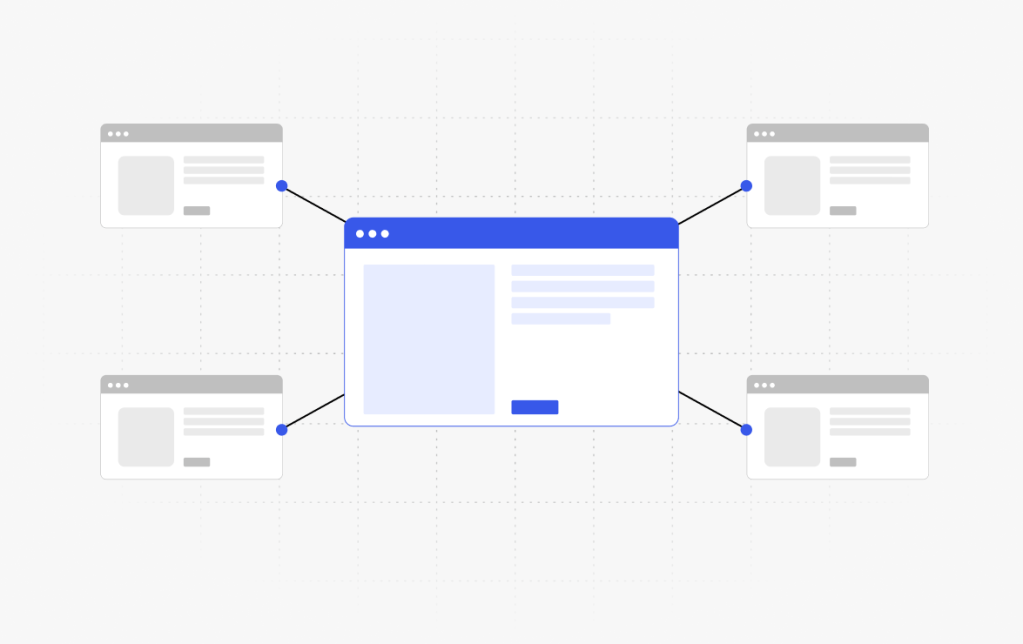
A strong approach is to develop a central pillar page and support it with detailed articles that explore specific use cases. Over time, this creates a network of content that is both comprehensive and tightly connected.
Instead of asking how many articles you can publish, the more useful question is how thoroughly you can cover a topic.
Step 5: Consolidate or remove weak pages
Many affiliate sites have accumulated overlapping content over time. Multiple pages targeting slight variations of the same keyword can dilute performance rather than improve affiliate content rankings.
Bringing those pages together into a single, more comprehensive resource often leads to better results. It creates a stronger signal of relevance and eliminates internal competition.
At the same time, it’s important to be realistic about content that no longer adds value. Pages that are thin, outdated, or indistinguishable from others on the web can weigh down your overall site quality. Removing or setting a page to “noindex” is not a loss. It’s a way to strengthen the performance of everything else.
Step 6: Keep your affiliate content fresh
Freshness has become a more visible factor in ranking performance.
Affiliate content that hasn’t been updated in several months can gradually lose visibility, even if it was once competitive. This is especially true in categories where pricing, features, and product positioning change frequently.
Updating content should be an ongoing process. Refreshing screenshots, verifying links, and adding current context all signal that your content is actively maintained. Even small updates can make a meaningful difference when they reflect real changes in the product or user experience.
Because freshness now carries more weight in rankings, include published and updated dates on your posts to signal relevance. You can also include this information via schema to provide additional context for search engines. For a full walkthrough of SEO fundamentals, WordPress.com’s essential SEO guide covers everything from keyword optimization to technical setup.
Step 7: Diversify beyond search
One of the clearest lessons from this update is that relying entirely on search traffic carries risk.
Affiliates who are growing sustainably are building audiences across multiple channels. Video platforms, email newsletters, and social media all provide ways to connect directly with users. For practical ideas on expanding your reach, explore our article on creative WordPress.com affiliate strategies. If social media is a new channel for you, our beginner’s guide to social media affiliate marketing can help you get started.
This complements the shift toward experience-driven content. A short video showing a real site build or a feature walkthrough can be just as effective, if not more so, than a written article.
Why WordPress.com affiliates have an advantage in 2026
This Google update has created a clear divide between content produced at scale and content grounded in experience.
For affiliates promoting WordPress.com, WooCommerce, Jetpack, and Pressable, this creates a meaningful advantage. These are products that can be shown, tested, and measured in ways that many competitors cannot easily replicate. Affiliates who invest in that level of depth are not just aligning with Google’s expectations. They’re building content that is inherently more useful to readers.
The best affiliate content starts with real product experience. By joining the Automattic Affiliate Program, you can promote tools that creators, businesses, and developers use to build websites, grow audiences, and sell online while creating content based on firsthand experience.
Whether you create tutorials, reviews, comparisons, or educational content, WordPress.com gives you the opportunity to build content around a product you can actually explore and demonstrate. Join the affiliate program to access your unique referral links and start earning by sharing WordPress.com with your audience.
What to expect next
If your traffic has declined, affiliate SEO recovery won’t be immediate.
Google tends to validate meaningful improvements during subsequent core updates, with the next expected window in mid-2026. That means the work you do now may take time to fully reflect in rankings.
There’s no quick fix, but the direction is clear. Affiliates who begin shifting toward experience-driven, high-quality content now will be in a much stronger position as the landscape continues to evolve.
Success in affiliate content SEO in 2026 is less about publishing volume and more about demonstrating real product experience over time.
Frequently asked questions about affiliate content SEO and Google’s 2026 updates
Why are affiliate sites losing rankings in 2026?
Affiliate sites are losing rankings because Google now prioritizes firsthand experience and original insights. Content that’s generic, templated, or AI-generated without real product usage is being devalued.
What kind of affiliate content performs best now?
Content that includes real product usage, original screenshots, measurable results, and detailed insights performs best. Google rewards content that demonstrates genuine experience and adds new value.
How can I improve my affiliate content rankings?
Focus on adding your firsthand experience, consolidating thin content, improving author credibility, and keeping content updated. Building depth within a specific niche is more effective than publishing broadly.
How important are author bios for SEO?
Author bios are increasingly important because they help establish credibility and expertise. Linking to external profiles and demonstrating real-world experience strengthens trust signals.
Should I delete old affiliate content?
Not always, but you should evaluate it carefully. Consolidate overlapping content and remove or “noindex” pages that don’t provide unique value to improve overall site quality.
How often should affiliate content be updated?
Updating content every 60 to 90 days is a strong baseline. Regular updates to pricing, features, and screenshots help maintain relevance and rankings.
Is SEO still worth it for affiliates?
Yes, but it should be part of a broader strategy. Combining SEO with video, email, and social platforms creates a more resilient and sustainable traffic model.
Does AI-generated affiliate content still rank?
AI-generated content that lacks firsthand experience, original screenshots, or unique insights is being deprioritized. Content that uses AI as a drafting tool but includes real product usage, personal observations, and specific results can still perform well. The key distinction is whether the content adds something new or simply reorganizes what already exists.
 Automattic Affiliate Program - Knowledge Base