

Want to earn affiliate commissions by recommending hosting plans but not sure where to start? These 10 practical web hosting affiliate tips will help you build trust, create useful content, and start making progress, even if you’re brand new to affiliate marketing. Designed specifically for beginners, these actionable strategies and tips will help you improve your conversions and build a solid foundation for promoting website hosting. Whether you’re just starting or looking to sharpen your approach, these tips make it easier to turn clicks into commissions.
Key takeaways
Web hosting affiliate success comes from matching the right hosting recommendation to the right audience. Here’s what matters most:
- Trust comes first. Promote hosting providers you’ve used, tested, or researched enough to explain clearly.
- Audience fit matters. Bloggers, small businesses, developers, and agencies often need different hosting features.
- Helpful content performs better than generic promotion. Comparisons, reviews, tutorials, and myth-busting posts can help readers make confident decisions.
- SEO and AI search can help your content get discovered. Use clear headings, specific keywords, structured sections, and direct answers to common hosting questions.
- Tracking helps you improve over time. Monitor clicks, conversions, and content performance so you can refine your CTAs, link placement, and article formats.
Tip 1. Choose a hosting provider you trust
A good affiliate relationship starts with trust. Choose a web hosting provider that you use personally or have researched thoroughly. This way, you can confidently recommend their services, and your audience will pick up on your genuine enthusiasm.
Tip 2. Know your audience and their hosting needs
Before promoting any hosting plan, take time to understand your audience. Are they bloggers, small business owners, or developers? Each group has unique needs, and tailoring your content to address those needs will make your recommendations more effective.
Tip 3. Create comparison content
Comparison posts are great for highlighting the differences between hosting providers. They help readers make informed decisions and often attract visitors who are close to making a purchase. Comparison posts give shoppers the confidence to choose, and your content can tip the scales.
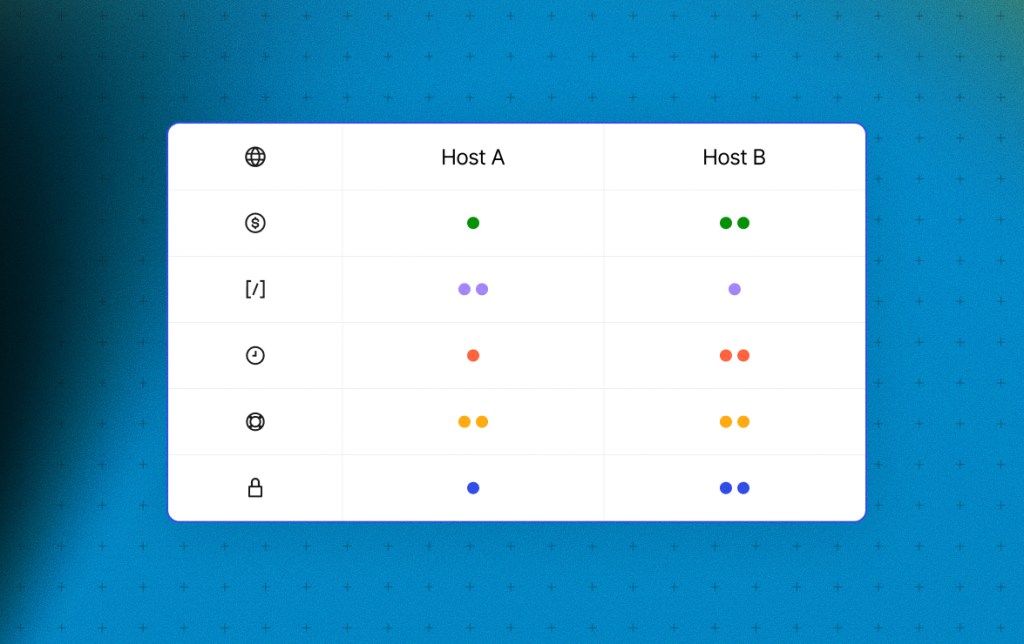
In addition to side-by-side comparisons, myth-busting content can also drive significant traffic and trust. Many people are confused by common hosting misconceptions, and clearing those up helps position you as a helpful resource. For example, if you’re promoting WordPress.com hosting, you might tackle the widespread confusion around the difference between WordPress.com and WordPress.org.
One common myth is that WordPress.com and WordPress.org are the same. While both use the same core WordPress software, they serve different needs: WordPress.com includes managed hosting, while WordPress.org requires separate hosting and more hands-on site management.
Our post on WordPress.com vs WordPress.org is an example of how educational, myth-busting content can boost clarity for your readers while creating an opportunity for you to earn commissions with WordPress hosting.
Plus, using comparison and myth-busting content can be a powerful tool for boosting your search rankings. If your comparison explains different hosting models, WordPress.com’s guide to managed vs. shared WordPress hosting can help you frame those differences in beginner-friendly terms.
Tip 4. Write honest, experience-based reviews
Authenticity is key in affiliate marketing. Share your own experiences about what you liked and what you didn’t like about a particular provider. Readers love data, so include as many helpful details, screenshots, or personal test results as you can. Supply your audience with benchmarks, before-and-after performance from site migrations, and detailed price comparisons to make your review more useful. The more specific you can be, the more likely your readers will trust your recommendations and view you as a helpful resource. For a deeper look at structuring review content, read our guide on how to write hosting reviews that convert.
Tip 5. Optimize hosting affiliate content for search engines and AI search
A key affiliate tip many overlook is that getting your content seen requires optimizing for both search engines and AI search. Start with keyword research and basic on-page SEO, such as using relevant headings and meta descriptions. Tools like Ahrefs, Semrush, or free options like Google Keyword Planner can help you find keywords that match your audience’s search habits. For more specific guidance, our SEO tips for hosting affiliates cover keyword strategy, content structure, and optimization tactics for competitive hosting topics.

Tip 6. Include clear calls to action
Don’t leave your readers guessing. Include clear, visible calls to action (CTAs) that guide them toward signing up for the hosting plan you recommend. Make your CTAs bold and easy to find, and use words that direct your readers, such as “Get Hosting Now” or “Try WordPress.com Today”. Place CTAs above the fold, in buttons, or at natural breakpoints in your content. Be sure to include your affiliate link and your disclosure near your outbound referral links on your page. If you want more examples, our guide on where to place hosting affiliate links explains how to use CTAs, buttons, comparison tables, and in-content links without overwhelming readers.
Tip 7. Leverage tutorials and how-to guides
Hosting is a practical product, so tutorials and how-to guides can be a great way to drive conversions and help you earn commissions with WordPress hosting. Show your readers how to set up a website, install WordPress, or migrate from another host, and naturally include your affiliate links in the process. Tutorials and step-by-step how-to guides are great for SEO purposes as well, especially if they easily show users how to fix common problems they may be experiencing.
Tip 8. Use visuals to build trust
Visuals can make a big difference in helping your audience feel confident in their decision. Screenshots, logos, and short videos can demonstrate what they can expect from a web hosting provider, while trust badges and seals can help build credibility. We recommend using your own screenshots when possible, as this also increases trust with your audience.

Tip 9. Test and track performance
Use your affiliate dashboard, plugins, or simple tracking links to monitor which content drives the most clicks and conversions. Experiment with different headlines, CTAs, and formats to see what resonates with your audience. If you have existing content that receives significant traffic but isn’t yet monetized, or has grown stale with outdated information, updates can be a quick way to improve evergreen content on your site.
Tip 10. Stay educated and evolve
Affiliate marketing trends change quickly, and hosting companies often update their features. Keep up to date by following affiliate blogs, newsletters, or industry news to stay ahead of the curve. This will help you adapt and continue to grow your affiliate income. Many affiliate tracking platforms provide walkthroughs or training modules that can help you familiarize yourself with their platform, such as Impact’s free PXA Courses. Don’t hesitate to reach out to your affiliate team with questions, as they can help provide you with the latest information and direct you to public product and feature updates.
Getting started as a web hosting affiliate doesn’t have to be complicated. By focusing on these 10 essential tips on how to make money as a hosting affiliate, you’ll be better equipped to promote hosting plans, build trust with your audience, and turn clicks into commissions. For additional beginner-friendly resources, check out our Automattic Affiliate Program Knowledge Base for affiliate marketing basics and start your journey to success today.
Not an affiliate yet? Sign up for the Automattic Affiliate Program and start earning commissions with trusted hosting brands like WordPress.com and Pressable.
Frequently asked questions about web hosting affiliate marketing
What is a web hosting affiliate?
A web hosting affiliate earns commissions by recommending hosting providers through tracked affiliate links. When someone clicks the affiliate link and completes a qualifying purchase or action, the affiliate may earn a commission.
What content works best for web hosting affiliates?
Comparison posts, hosting reviews, tutorials, setup guides, and myth-busting articles often work well for web hosting affiliates because they help readers choose a hosting provider or understand how hosting works.
How can hosting affiliates improve SEO?
Hosting affiliates can improve SEO by targeting specific search intent, using clear headings, answering common hosting questions directly, adding helpful screenshots or performance details, and linking to related content that helps readers make informed decisions.
How can hosting affiliates build trust with readers?
Hosting affiliates can build trust by being specific, transparent, and balanced. Share real experience when possible, explain who each hosting option is best for, include clear affiliate disclosures, and avoid recommending products that don’t fit your audience.
 Automattic Affiliate Program - Knowledge Base